

Instructional Modules for Professional learning Responding to Opportunities and Valuing Educators (IMPROVE) is a peer-reviewed virtual professional development resource. Modules within the resource are collaboratively authored by candidates in their final semester of coursework in the EdD in Curriculum & Instruction at Gardner-Webb University and promote positive, data-informed, sustainable change in instructional practices or organizational structures to improve student learning at the K-12 level and beyond.
The learning cycle featured in the modules in this resource is based on the STAR Legacy Cycle developed by the IRIS Center (2013); http://iris.peabody.vanderbilt.edu/) and based on the work of Dr. John Branford and colleagues (National Research Council, 2000).





















-

Behavior Management Strategies for Beginning Teachers
Tonisha Chislom, Cambridge Gamble, and Margaret McGee
Behavior Basics: Empowering New Educators is a professional learning module (PLM) intended to shape behavior and ignite success. This learning module is geared towards beginning teachers looking to strengthen their classroom management by reflecting on research based strategies highlighted in this module.
-
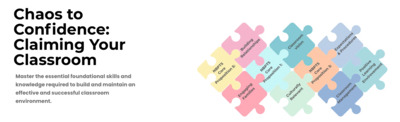
Chaos to Confidence: Claiming Your Classroom
LaShae Tietsort, Dasha Glover, Keyana Jackson, and Shanel Beason
Nearly half of educators reported that students' behaviors were “a lot worse” than in 2019 before the pandemic (Peetz, 2025). Since COVID, teachers report that students are more prone to misbehavior and defiance, less socially skilled and emotionally mature, less motivated, focused, and present in class, and academically behind, struggling with attendance (Macias, 2024).
The goal of this professional learning module is to equip educators with research-based strategies for establishing a clear classroom vision, implementing effective procedures and expectations, and fostering strong relationships with students and their families. These strategies aim to enhance student engagement and create a supportive learning environment through culturally responsive teaching practices. Master the essential foundational skills and knowledge required to build and maintain an effective and successful classroom environment with Chaos to Confidence.
-

Integrating AI in Instruction
Janet Evans, Melissa McClary, and Jennie Handy
Integrating AI in Instruction is a Professional Learning Module (PLM) created to help educators feel more confident and informed about using artificial intelligence (AI) in the classroom. Many teachers feel unsure or even a little afraid of AI simply because it is unfamiliar. This module is designed to break down those fears by introducing practical tools, real classroom applications, and simple strategies that align with high-impact teaching practices. You will explore how to use AI in ways that are ethical and equitable, with a focus on student data privacy and digital citizenship. You will also reflect on how AI can support personalized learning, save time, and enhance your instructional approach without compromising academic integrity or teacher autonomy. By the end, you'll be better equipped to make thoughtful, informed decisions about AI in your teaching.
-

Rooted in Connection: Using AI to Strengthen Communication
Matthew Feuer, Betsy Hanks, Bradi Jordan, and Brice Melton
Communication in the digital age of Artificial Intelligence (AI) may feel like a journey into a crowded forest for many educators. This professional learning module (PLM) aims to support teachers in their use of AI to communicate with families to provide a more rooted feel. The module is framed around the responsible use of AI and rooted in research on the importance of establishing effective communication and building relationships with students and their families. Teachers at any experience level will benefit from the use of this PLM. From beginning teachers hoping to reduce the overload of their new career, to veteran teachers venturing into the latest technological advancements-- anyone can find benefit from the tools in this module that will help them overcome challenges. Other school staff and administrators may find the information in this PLM helpful as they guide their faculty and staff into the use of AI.
-

Strengthening Student Talk and Academic Discourse
Ashley Bushell, Amber White, and Jamie Richardson
This Professional Learning Module (PLM) on Strengthening Student Talk and Academic Discourse is designed to support K-12 grade educators in integrating student talk and academic discourse into their classrooms to improve student engagement. Grounded in research, this PLM provides participants with practical strategies and resources to use in their classroom through the integration of student communication. Regardless of your role in the school, this module will help you foster academic conversations in your classroom that can lead to your students gaining confidence and a deeper understanding of the content. By the end of this module, you will have taught a lesson using the knowledge gained from completing the PLM.
-

Battling Burnout Zombies in High School English
Jennifer Gribben and Michelle Nelson
This PLM was created to support secondary education English teachers who are struggling to prevent student disengagement in ELA classrooms. This PLM was based on John Hattie's 10 habits. The creators of this PLM also used Explicit DIRECT Instruction and Rigorous curriculum design to ground their ideas in proven RESEARCH. This PLM will give teachers a place to find ideas and strategies to help make their classrooms a successful learning environment.
-

Cultural Responsibility: Whose Job Is it Anyway?
Shannon Coleman, Siobhan Cooke, Yu'Vonne James, and Elizabeth Younger
This professional learning module (PLM) on cultural responsibility in the school setting is rooted in the recognition of the importance of creating an inclusive and equitable learning environment for all students and staff. This PLM module was designed to help teachers, and those working within the school setting, understand, appreciate, and effectively address cultural diversity and its impact on students’ learning experiences.
-

Tools, Tips, and Tricks for Beginning Teachers
Kimberly Lilley, Regina Lineback, Brad Rhew, and Elia Spencer
Tools, Tips, and Tricks for Beginning Teachers is a professional learning module (PLM) that supports the growth and development of beginning teachers. The topics reviewed in this PLM include classroom management, collaboration, instructional strategies, and student engagement. The strategies included in this PLM are research-based and support the Beginning Teacher Standards, Professional Teaching Standards, and Beginning Teacher Standards for Science Education. As you proceed through the PLM, you will have opportunities to consider your current or planned practices in each of the focus areas and select new tools, tips, or tricks that can be applied to your classroom practices.